Fantasy is the hardest genre to hand to an AI. A fantasy novel needs a plot, plus a magic system with costs and limits, a map, a history, names that do not drift, and a cast that survives into book two. Any AI can write a lovely opening scene. The test is whether chapter thirty still obeys the rules of chapter three, and whether book three remembers who died in book one.
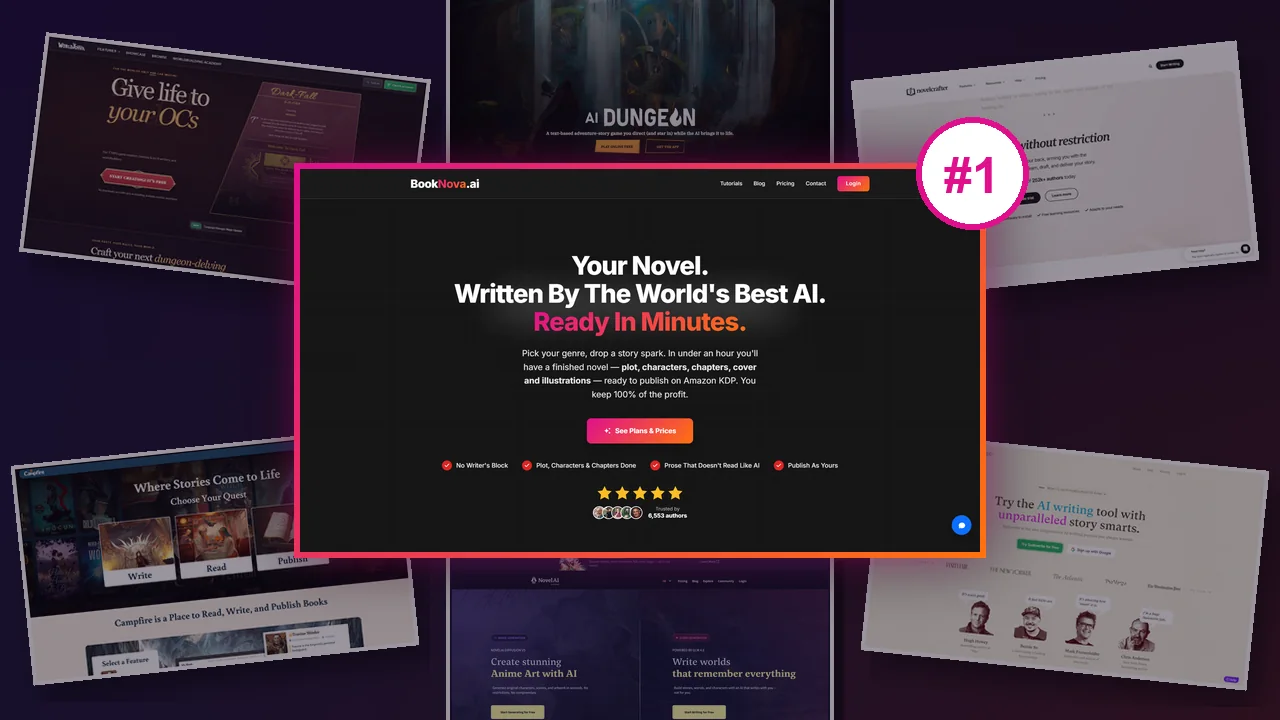
We compared eight tools fantasy writers search for, from AI writers to worldbuilding wikis, and ranked them by what a fantasy book needs. Prices and features come from each vendor's own page.
The short answer
- Best AI fantasy story generator for a finished novel or a whole series: BookNova. It builds a Story Bible from your premise, writes every chapter in order while tracking characters, what they know and open threads, and on Platinum carries canon from book to book. One payment, from $59 in the US.
- Best lore wiki for writers who draft every scene themselves: Novelcrafter, with its Codex
- Best prose help inside a Story Bible: Sudowrite
- Unlimited text with a trigger-key lorebook: NovelAI
- Best worldbuilding without AI: World Anvil and Campfire
- For play, not books: AI Dungeon. For brainstorming: ChatGPT
We make BookNova, ranked first here. Competitor facts come from their own pages, read on November 22 and 23, 2026, and are linked; screenshots were taken on November 23, 2026.
Why fantasy breaks most AI writers
The rules slip. Fire magic costs the caster body heat. By chapter twelve someone throws fireballs in a snowstorm and nobody shivers, because the rule fell out of the text the AI can see.
The names converge. Ask a chat assistant for a fantasy heroine and you meet the same woman again and again. In our own test on November 22, 2026, the two GPT-6 models behind ChatGPT named her Elara in 16 and 18 runs out of 20, and Claude in 19. Readers notice. Making ChatGPT write fiction like a human lists the other tells.
The series falls apart. A five-book saga of 60,000 words each is about 300,000 words, more than ChatGPT's everyday window holds on any plan. Something has to carry the canon between books, and in most tools that is you. See writing a five-book series with AI.
How we ranked them
Each tool was scored out of 10 on five things:
- Keeps lore and magic rules consistent (25%). Does the tool feed your world into the writing, or do you paste it in?
- Worldbuilding tools (20%). Places for characters, cultures, magic, maps and history.
- Series support (20%). Does canon, including who is alive and what they know, carry into book two?
- Length (20%). A full-length novel, not just scenes or a game session.
- Path to publishing (15%). Cover, ebook and print files, or at least an export.
A worldbuilding wiki can be excellent and still score lower here, because it does not write the book.
The eight at a glance
| # | Tool | Best for | How it remembers your world | Series across books | Starting price | Score |
|---|---|---|---|---|---|---|
| 1 | BookNova | A finished fantasy novel or series | Story Bible plus tracked characters, knowledge and threads | Canon and character states carry over | $59 once (US) | 9.5 |
| 2 | Novelcrafter | Deep lore, you write the scenes | Codex entries you write | Series built in | $4/mo plus AI | 8.3 |
| 3 | Sudowrite | Polished prose, scene by scene | Story Bible with a worldbuilding section | Continuity across a series | $19/mo | 7.9 |
| 4 | NovelAI | Unlimited text, sandbox writing | Lorebook with trigger keys | Not a listed feature | $10/mo | 7.0 |
| 5 | World Anvil | A public or private world wiki | Articles, maps, timelines you write | One world bible for many books | Free, then $7/mo | 6.8 |
| 6 | Campfire | Magic, species and cultures by hand | Modules you fill in | Not a listed feature | Free, then $12/mo | 6.6 |
| 7 | ChatGPT | Brainstorming a world | The chat window | You keep the notes | Free, then $8/mo | 6.1 |
| 8 | AI Dungeon | Playing a fantasy adventure | Story Cards and memories | Not for books | Free, then $14.99/mo | 5.8 |
BookNova
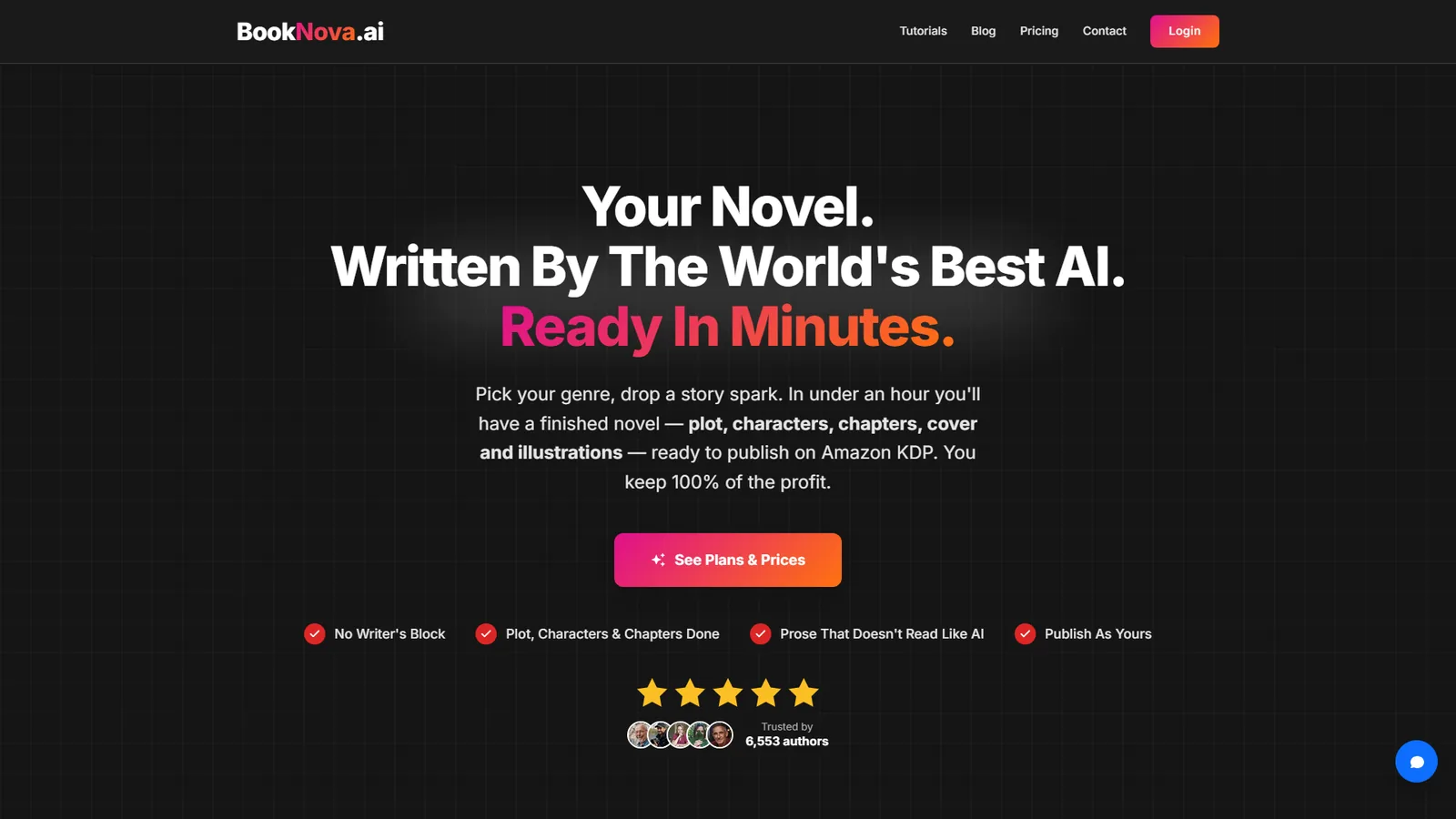
BookNova is built for the fantasy writer who wants the book, not another empty wiki. Choose Fantasy and a subgenre (romantasy sits there too), then give it your premise, from one line to pages of notes on the magic and the map. It turns that into a Story Bible, a cast and a chapter plan, and you change anything before a word is written. Planning costs no credits.
Then it writes the chapters in order. While it writes, it tracks every character, what each one knows and which threads are still open, so the heir does not learn the secret two chapters early. Auto mode writes the whole draft in 30 to 90 minutes. Sail mode shows one editable plan per chapter and writes once you have steered it. After the last chapter it makes the cover and chapter art, then prepares files for KDP, Lulu and Draft2Digital.
For a saga, Platinum and Author carry the canon and each character's state from book to book, and every book exports on its own. As of November 22, 2026, more than 1,500 series have been started and more than 13,000 books finished, averaging about 42,000 words. Real author reviews are public.
What a fantasy writer gets
- A full novel written in order, with characters, knowledge and open threads tracked
- Series canon and character states carried into the next book (Platinum and up)
- Cover, chapter art and files ready for KDP, Lulu and Draft2Digital (Pro and up)
- Safe, mature or explicit setting per book, and YA with a reader age setting
Good to know
- No free trial; a 30-day refund on a first plan instead
- If you want to build a world wiki for its own sake, World Anvil fits that better
Choose it if you want the trilogy written, not just planned, and you would rather steer the story than type every sentence. Compare head to head: Novelcrafter vs BookNova, Sudowrite vs BookNova.
Novelcrafter
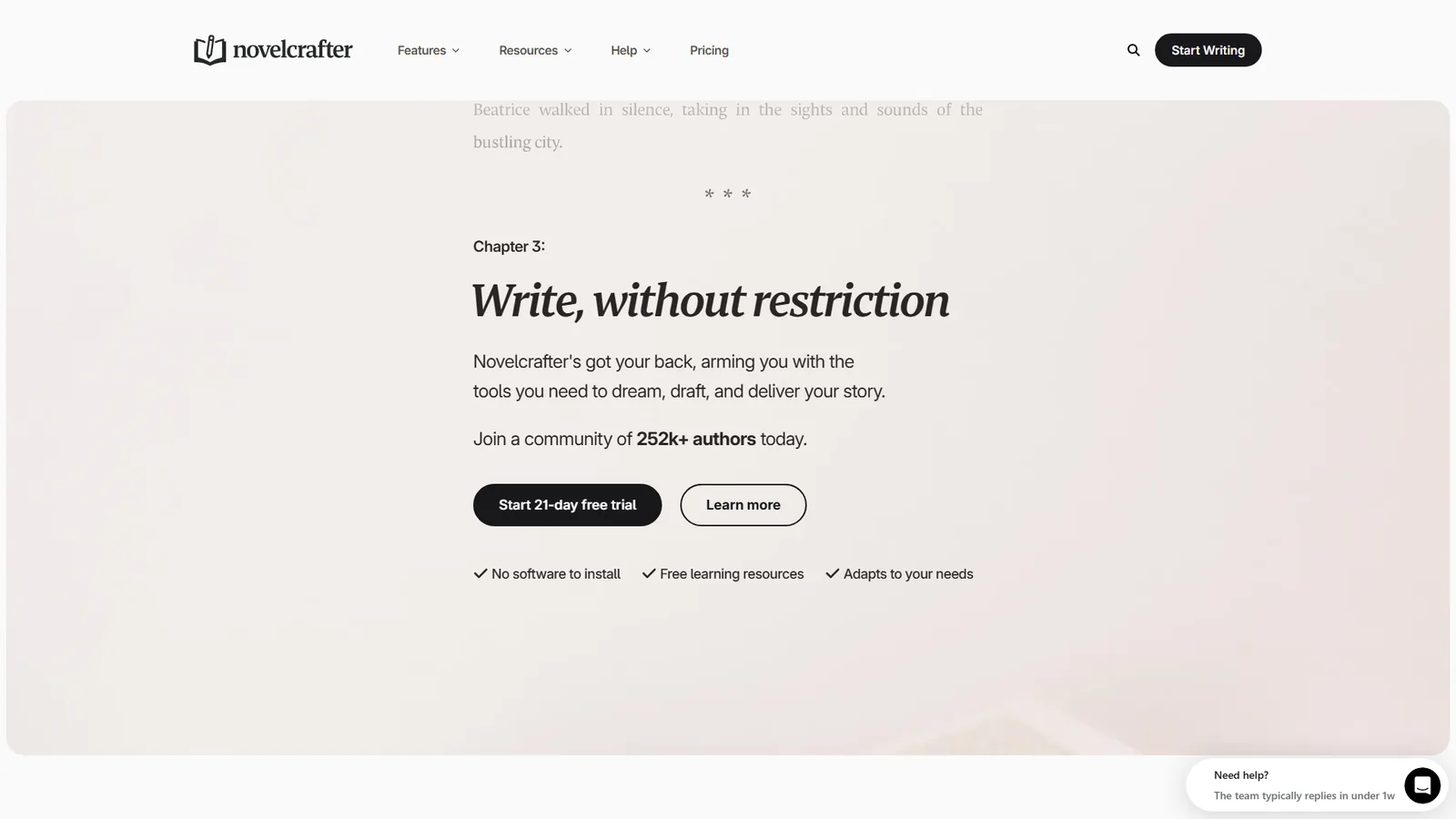
Novelcrafter is the tool fantasy writers mention when lore gets heavy. Its Codex is a private wiki: characters, places, objects and lore get entries, the app spots mentions in your text, and the matching entries go along with each prompt. The pricing page lists Series on every plan, with Universes marked as planned.
The AI is not included. From Hobbyist at $8 a month you connect your own key and pay the provider for what you use. The Codex is only as good as what you put in it, and some writers spend a month on entries and have no chapter one. More in Novelcrafter pricing.
Choose it if you want to write each scene yourself with your lore always at hand. Skip it if you want the chapters written for you. Compare: Novelcrafter vs BookNova.
Sudowrite
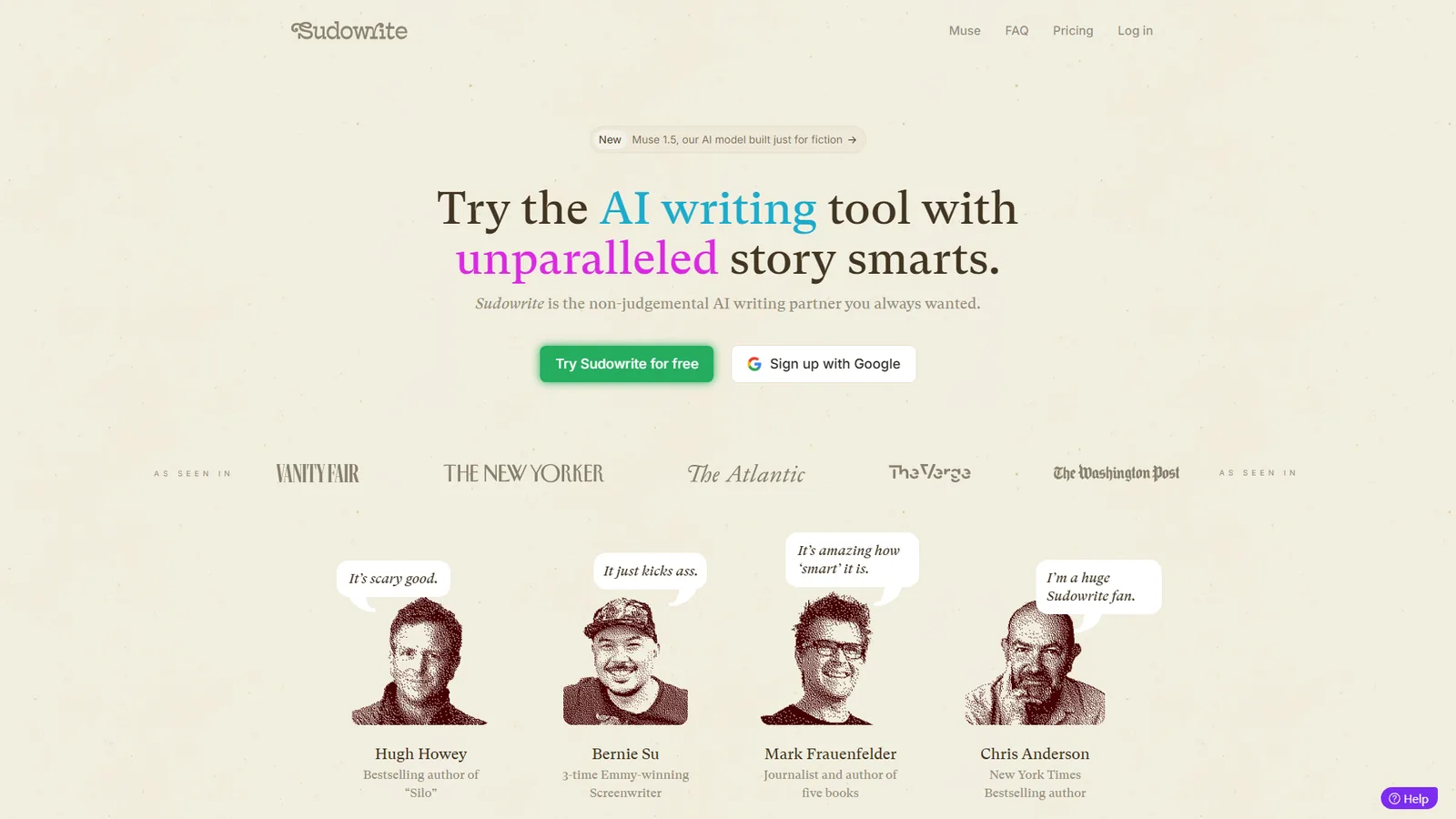
Sudowrite is the best-known AI tool for fiction, and its Muse model writes vivid prose. Its Story Bible runs from braindump to characters, worldbuilding, outline and scenes, and feeds each generation. Every plan on the pricing page now lists "Ensure continuity across a series."
For a long fantasy, the meter matters. By Sudowrite's own figures, one 80,000-word draft on Muse uses about 960,000 credits, nearly a month of the $29 Professional plan. You still build the book scene by scene. Full numbers are in our Sudowrite pricing guide.
Choose it if you write the book and want a strong partner for description and battle scenes. Skip it if you want the draft finished for you. Compare: Sudowrite vs BookNova.
NovelAI
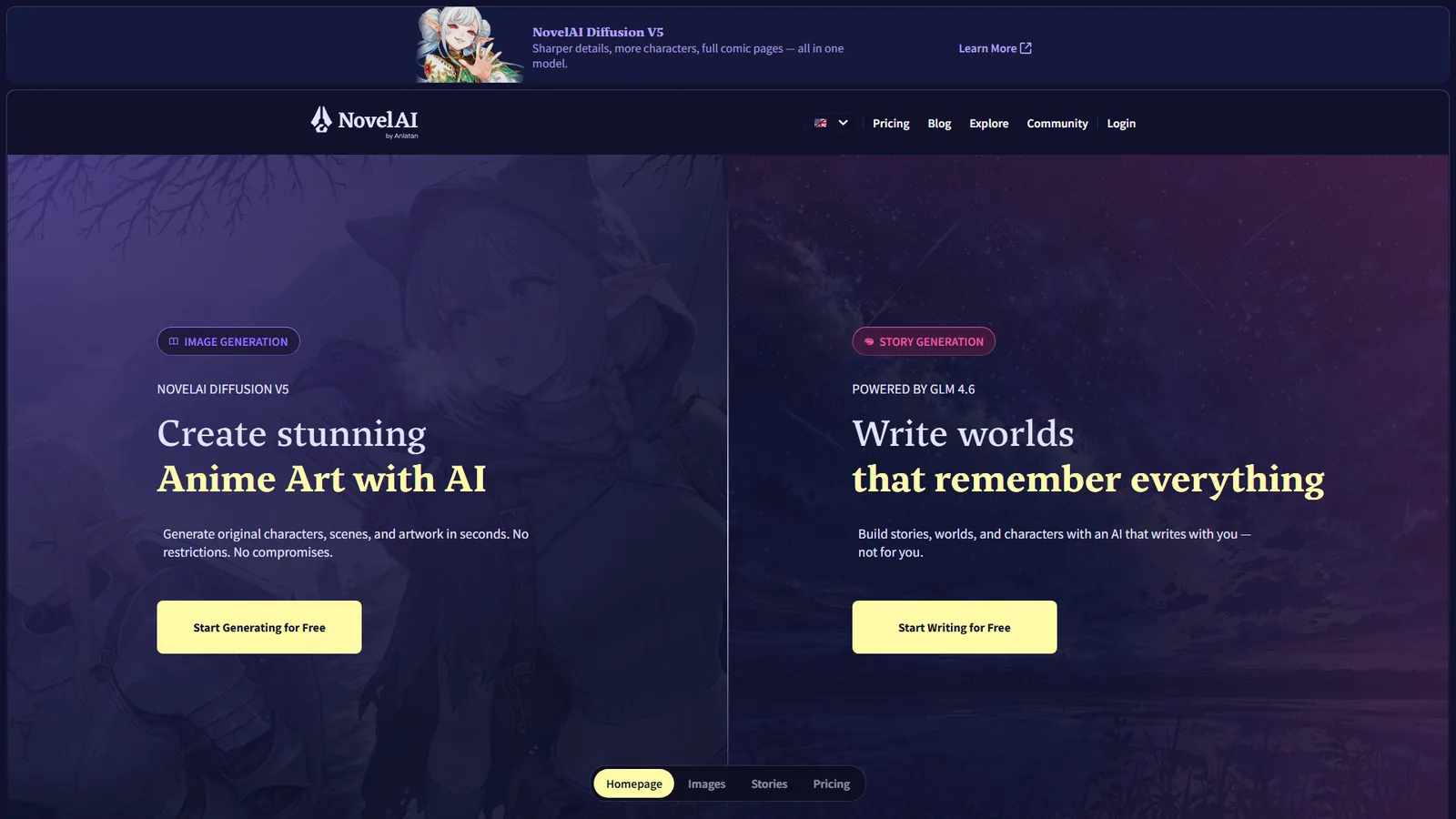
NovelAI gives unlimited text generation on every paid tier, which suits writers who regenerate a lot. Its Lorebook is made for large worlds: each entry has activation keys, and when a key appears in recent text, the entry is added to what the AI sees. Its models page lists about 28,672 tokens of context, roughly a quarter of a long novel.
The catch is structure: no outline tool, no chapter planner, and you design the keys. Its own homepage says it writes "with you, not for you." More in Sudowrite vs NovelAI.
Choose it if you enjoy steering an engine and hate meters. Skip it if you need help with the plot. Compare: NovelAI vs BookNova.
World Anvil
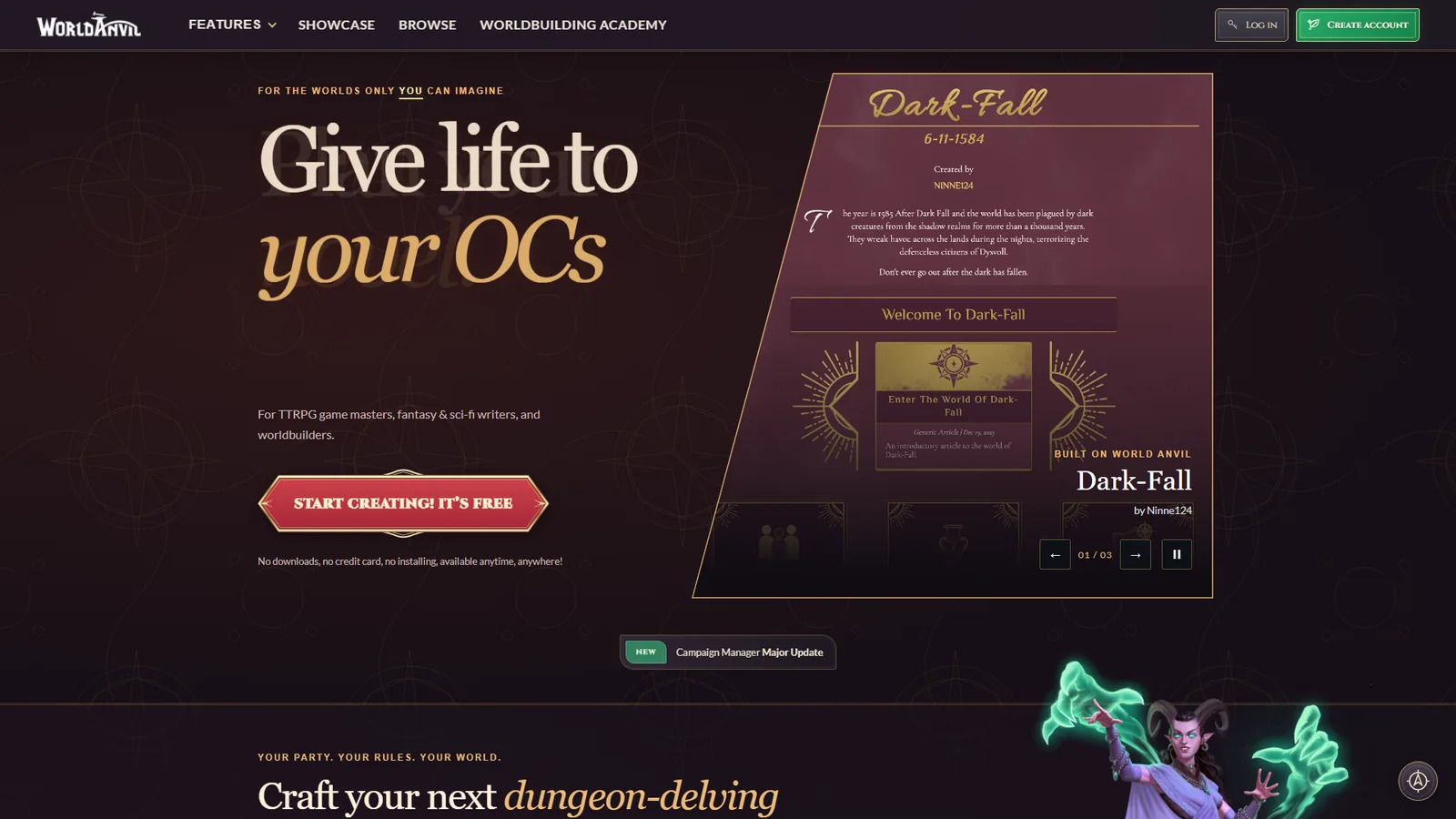
World Anvil is a worldbuilding platform "for TTRPG game masters, fantasy & sci-fi writers, and worldbuilders," and its pricing page counts more than 3,500,000 of them. You get article templates, interactive maps, timelines, family trees and a novel editor, Manuscripts. Its novel writing page pitches it as a place to "organize and search your world bible or series bible."
The free tier gives two worlds and your first 10,000 manuscript words. Master, at $7 a month or $4.50 billed yearly, adds unlimited manuscript words and private content. Lifetime plans start at $650, non-refundable. No AI is listed.
Choose it if you want a beautiful home for your world, maybe one you share with readers. Skip it if you want the book itself written.
Campfire
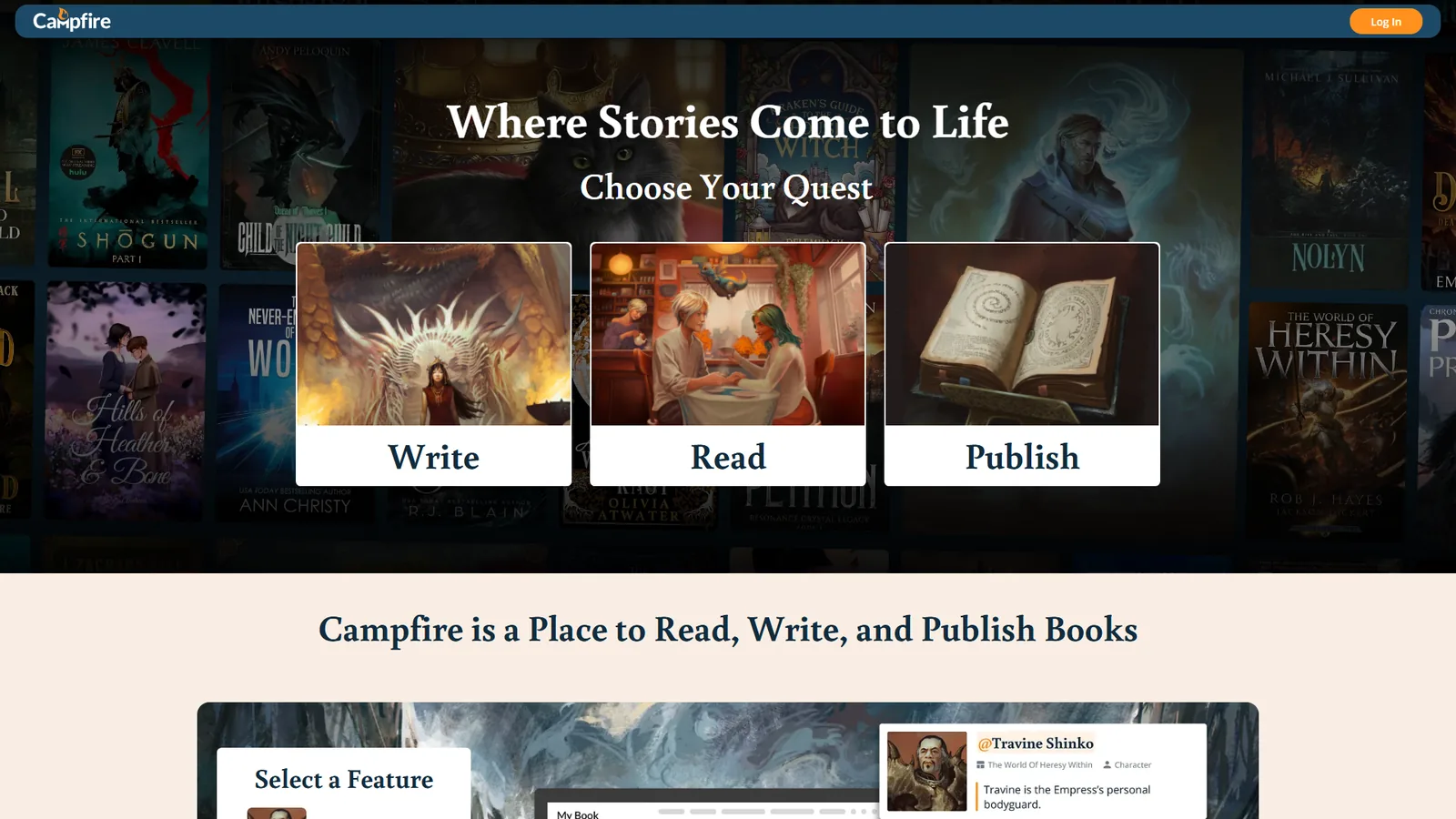
Campfire splits worldbuilding into modules: Manuscript, Characters, Timeline, Maps, Magic, Languages, Species, Cultures, Religions, Systems and more. The free plan has limited access to all of them, including a 25,000-word manuscript, 10 characters, 2 maps and 1 magic system. Standard was $12 a month on the day we looked, marked down from $19, and you can also buy single modules. You can export the manuscript as PDF or EPUB, and there is a mobile app.
Its homepage calls it "a Place to Read, Write, and Publish Books." Neither page mentions AI: every word and every magic rule comes from you.
Choose it if you think in magic systems and family trees and want them tidy. Skip it if you want an AI to write from them.
ChatGPT
ChatGPT is a fine place to invent a pantheon or test ten premises in an evening. Writing the novel in it is another matter. On the free plan the everyday model sees about 27K tokens, roughly 20,000 words, so early rules slide out of view mid-book and nothing carries them into book two. And the heroine will probably be Elara. Read why ChatGPT forgets your characters.
Choose it if you want to explore ideas for free. Skip it if you want a saga that holds together. Compare: ChatGPT vs BookNova.
AI Dungeon
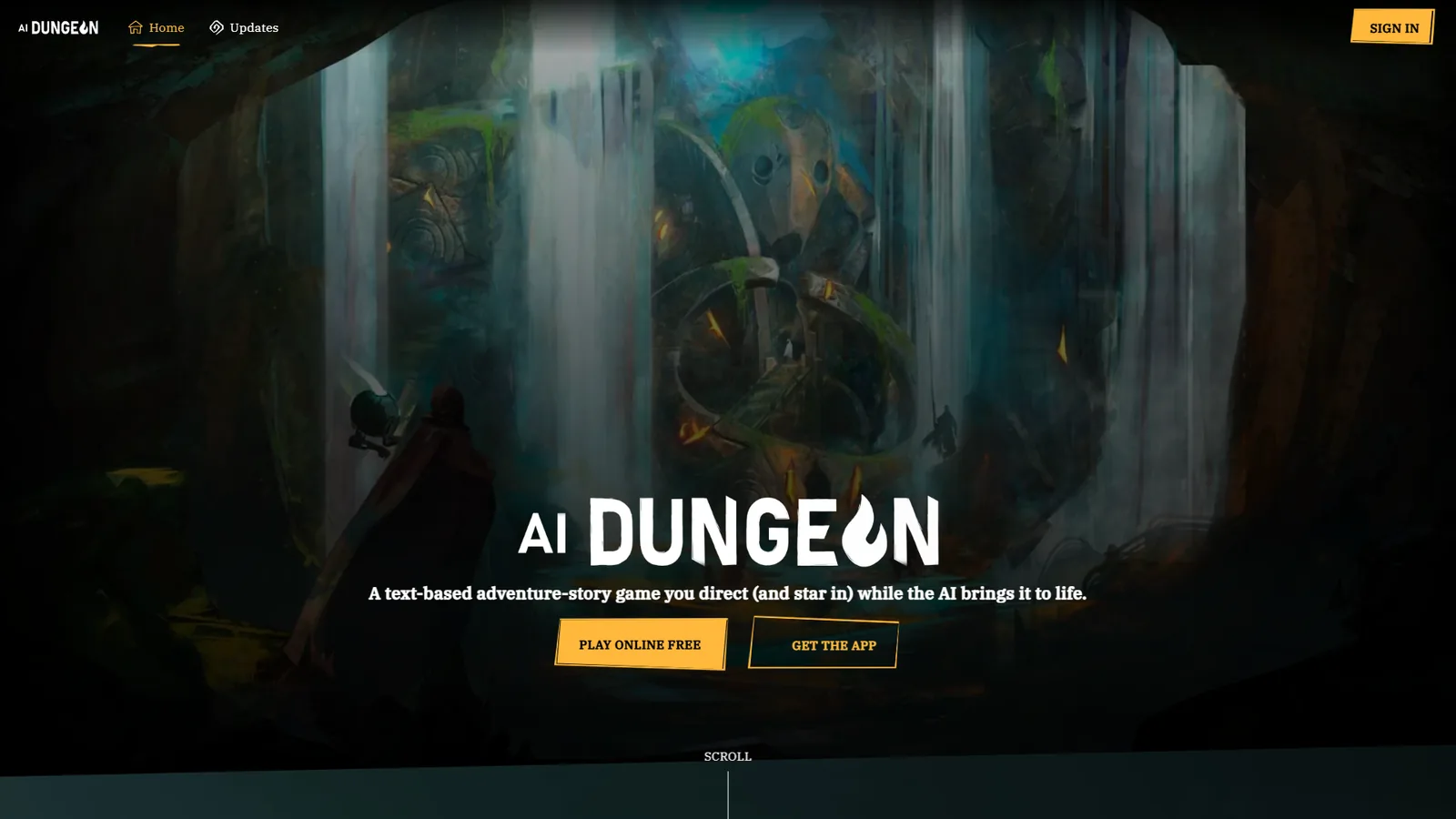
AI Dungeon is "a text-based adventure-story game you direct (and star in) while the AI brings it to life." You type actions, it answers, and fantasy quests are its home ground. Story Cards and Plot Essentials feed your world into each turn.
Its membership page is honest about memory: 4k tokens of context free, 8k on Journey at $14.99, up to 32k on Mythic and Ultimate, and with a short context "the beginning of your Adventure will likely be trimmed, or Story Cards may be removed." The same page calls 32k "about 40 pages of text": a long game session, a short part of a novel.
Choose it if you want to live inside your world for an evening. Skip it if you want a manuscript.
What the free starts give a fantasy writer
| Tool | Free start | What it means for a fantasy book |
|---|---|---|
| BookNova | No free plan; 30-day refund | Lite: $59 once, 50,000 words |
| Novelcrafter | 21-day trial, no card | Build a Codex; AI billed separately |
| Sudowrite | Small trial, no card | A few scenes, not a book |
| NovelAI | 50 text generations | A feel for the Lorebook |
| World Anvil | 2 worlds, 10,000 manuscript words | A world wiki and a chapter or two, by hand |
| Campfire | 25,000 words, 10 characters, 1 magic system | A novella-length draft, by hand |
| ChatGPT | About 27K tokens of memory | Brainstorming; early chapters fall out of view |
| AI Dungeon | 4k tokens, 25 memories | Short adventures |
Start with your world, end with a book
Worldbuilding done in World Anvil or Campfire is not wasted. Paste the magic rules, the factions and who wants what into your BookNova premise, and the Story Bible starts from your world.
Verdict: World Anvil and Campfire are the best places to build a world by hand. Novelcrafter is the best lore engine for writers who draft every scene, and Sudowrite the best prose partner. AI Dungeon and ChatGPT are fun for exploring a world, but neither holds a saga together. If you want a full fantasy novel, planned with you, written in order with every character and open thread tracked, and a series that carries its canon from book to book, with covers and files ready for KDP, Lulu and Draft2Digital for one payment, BookNova is the best AI fantasy story generator in 2026.
BookNova carries characters, facts and open threads from book to book, and prepares every book for KDP.
- 1,500+ series started
- Platinum and Author plans
- 30-day refund
FAQ
What is the best AI for fantasy writing?
For a finished fantasy novel or series, BookNova: it builds a Story Bible from your premise, writes every chapter in order and carries canon between books on Platinum and Author. For writers who draft their own scenes, Novelcrafter's Codex is the strongest lore tool. Our wider ranking of the best AI for writing a book covers other genres.
Is there an AI worldbuilding tool that also writes the story?
Novelcrafter, Sudowrite and NovelAI store lore the AI reads, while you drive scene by scene. BookNova builds the Story Bible from your notes and writes the chapters itself. World Anvil and Campfire have no AI writing.
How do I stop an AI from breaking my magic system?
Write the rules as short, testable lines (what it costs, who can use it, what it cannot do) and use a tool that sends them with every chapter. In a chat window, paste them again when the conversation gets long. Then check the finished book against the list.
Can BookNova write a fantasy series?
Yes, on Platinum ($179) and Author ($349), paid once in the US. Each new book starts from the canon and character states where the last one ended. There is a 30-day refund on a first plan.
Sources, read November 22 and 23, 2026
- Novelcrafter pricing, Sudowrite pricing
- NovelAI subscription tiers and models
- World Anvil pricing and novel writing software
- Campfire pricing and homepage
- AI Dungeon homepage and memberships and benefits
- ChatGPT pricing; our model test: ChatGPT vs Claude vs Gemini for novels
- BookNova pricing, author reviews